Running a business online in 2026 has changed. Google’s expectations have changed. Users are less patient. And if your website has faults, those faults may lcost your money.
Most business owners focus on marketing, offers, and sales. That makes sense. But the foundation those efforts sit on, your website and its technical aspect, can quietly take away everything and often the signs your website needs a redesign are hiding in these exact technical details. A slow page, a broken link, or even a security gap you never noticed, these can actually bring a negative impact.
This is not a checklist for developers. This is for a business owner who wants to know exactly what to look for and why it matters for your website.
Good web development services fix these problems before they become expensive. But first, you need to know what to ask about.
1. Core Web Vitals: Does Your Site Actually Load Fast?
Core Web Vitals, officially used by Google, is an excellent ranking factor. However, in 2026, you can not compromise this aspect. Consider three things as top priorities: 1. How fast your largest content loads (LCP), 2. how stable your layout is while it loads (CLS), and 3. how quickly it responds to a user’s first click (INP). If your website is good in all three aspects, you are winning.

Go to PageSpeed Insights and type in your URL. If you find that the LCP is above 2.5 seconds, you are losing both rankings and even customers. If your layout shifts around while loading, users leave. Most business websites fail at least one of these.
The fix usually involves image optimization, better hosting, and smarter code. This is exactly where professional web development services pay for themselves.
2. Mobile Usability: “Is It Good?”
Your website being technically visible on mobile and the results are not the same. In 2026, over 60% of web traffic comes from mobile. But if your mobile optimization is not proper, you are losing. If the buttons are visible too close together, text requires zooming, or forms are hard to fill out on a phone, you are losing scope.
Use Google Search Console’s Mobile Usability report. It will flag specific pages with issues. Walk through your own site on your phone. Try to book a call, fill out a correct form, or you can set up the page to allow users to make a purchase. If you get frustrated doing those things, your customers will face the same.
3. HTTPS and Security Basics
If your website still shows “Not Secure” in any browser, stop working on other things immediately and fix this. An SSL certificate is the bare minimum. But in 2026, security goes further.
Also, check the redirection of the pages from HTTP to HTTPS. Ensure that your contact forms use proper and end-to-end encryption. If you collect payment details or even store customer data, using a basic SSL would not be enough. As per IMB’s Cost of a Data Breach Report, the average cost of a breach for a small business has already exceeded $4.8 million globally.
Talk to whoever handles your web development services about security headers, firewall rules, and regular vulnerability scans, because these things matter. Remember that a single data breach can actually destroy years of trust, bringing negative impact.
4. Crawlability and Index
Search engines need to be able to read your website properly. You would be surprised how many business websites accidentally block Google from indexing their pages, or have duplicate content issues that confuse search engines and split their ranking power.
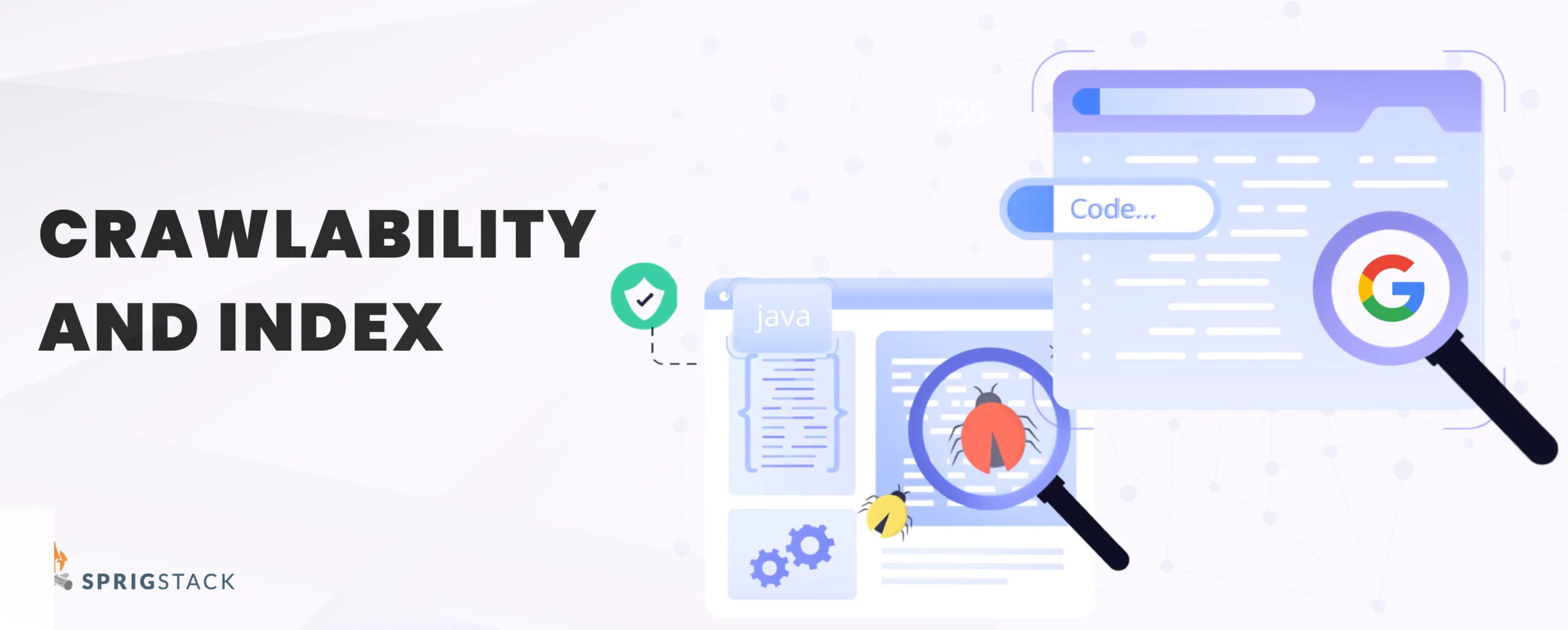
Go to Google Search Console and check your Coverage report. Look for any pages that are already marked as “Excluded”. Then, those pages should be excluded. Also, check your robots.txt file and ensure those block important sections.
Also, properly submit an updated sitemap on your website in the past years. These small changes can make a big difference in your overall visibility.
5. Broken Links and Redirects
Every 404 error on your site is actually a negative impact in front of your visitors and a wasted opportunity for Google. Broken internal links, outdated external links, and some wrong redirect chains negatively impact your site’s authority and user experience.
Research from Ahrefs shows that nearly 66.5% of websites have existing broken internal links. But the worst part is that many site owners have no idea about it.
Additionally, there are some top tools like Screaming Frog or Ahrefs Site Audit that would assist in locating the problematic links. This will enable you to know where the pages link from the old URL to the new URL.
6. Structured Data and Schema Markup
Small and mid-sized businesses find this aspect to be an opportunity. The structured data also informs Google about what content already exists on your website. This ensures whether your website is for local business, product, review, FAQ, or services.
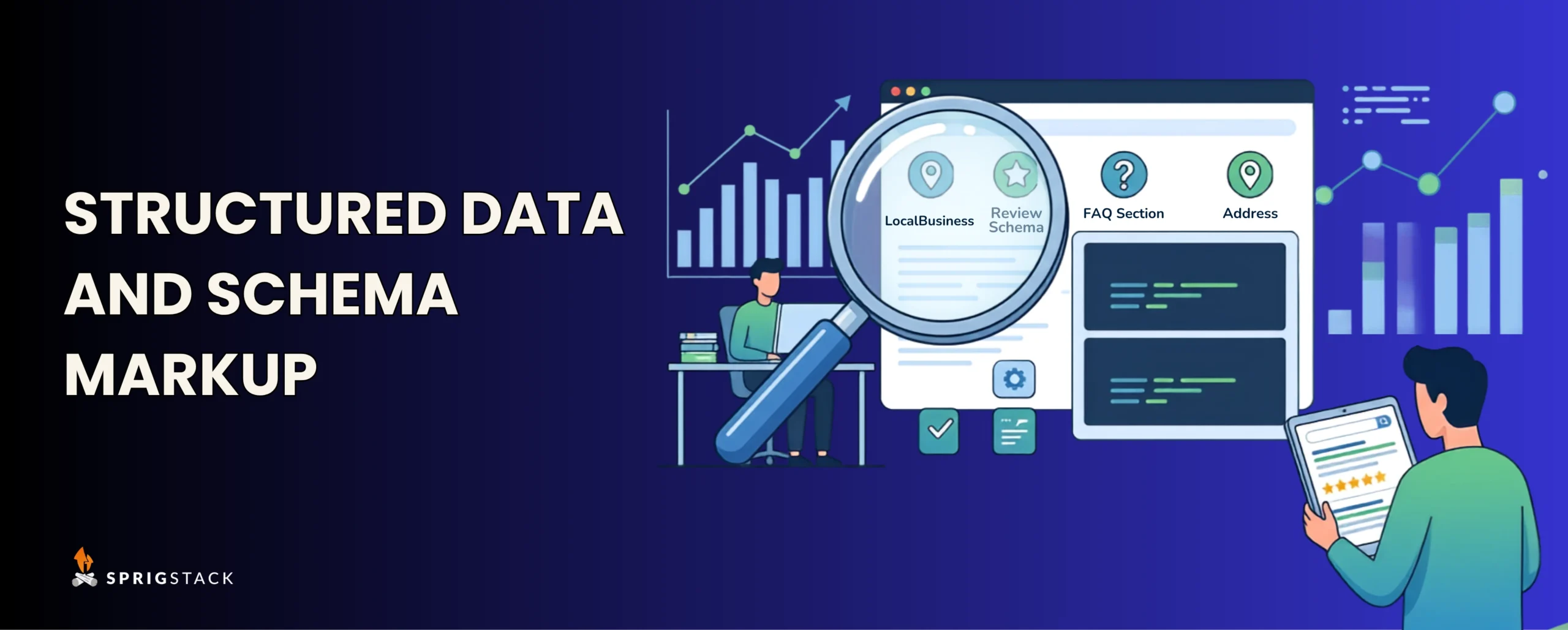
Ask your web development services provider whether your site has a proper schema markup. If you run a business locally, your site should have the LocalBusiness schema, business hours, address, and review schema.
These are not complicated to implement; all you need to do is do them correctly, or else, they are of no use.
7. Analytics and Conversion Tracking
You cannot improve what you do not measure. Many businesses still run their websites based on broken links and analytics. Google Analytics 4 is still considered a standard, but there are still a huge number of setups that are misconfigured. Goals are not tracked properly. Form submissions go unrecorded. Phone call conversions are missed entirely.
This is why check whether your GA4 is actually logging form button clicks and purchases. Set up proper conversion events if you have not.
If you run paid ads, make sure your conversion tracking is also connected so you know which campaigns are working and which are not. This single check can also save you thousands in wasted ad spend.
Conclusion
The businesses that win online in 2026 are not those that have created their sites with the biggest budgets. They are the ones paying attention to the details everyone else ignores. If you are not sure where your site stands, a technical audit from a reliable web development services team is the smartest first step you can take. Fix the foundation, and everything else you build will actually work in your website’s favor.